- The Wellness Wire
- Posts
- The Wellness Wire: Issue 20
The Wellness Wire: Issue 20
Longevity: cut through the hype

strove .ai
December 11, 2025 • Estimated reading time: 4 minutes

Tech billionaires are selling peptides. Influencers are selling ice baths. But the secret to longevity isn't found in a pill bottle. Read on for the stark reality of extending your life.
📢 The noise vs. the numbers
Does it feel like everyone is trying to sell you a secret to living forever?
Let’s be honest: the conversation around longevity has turned into a bit of a circus.
If you scroll through your feed, you’re likely to see shirtless tech billionaires comparing "biological ages", influencers promoting 20-step morning routines involving ice baths and red light panels, and ads for "miracle" supplements that promise to reverse the clock. It’s loud, it’s expensive, and for most of us, it’s completely overwhelming.
But if we strip away the marketing and the biohacking buzzwords, what actually works?

(Click to see the answer.)
In our recent webinar, Longevity: Hype, Hope, and What Actually Works, we aimed to do exactly that: separate the attention-grabbing stories from the evidence-based strategies that truly move the needle on your health. Led by our very own Chief Medical Officer, Dr Van Zuydam, the session went back to first principles to uncover the real science of living longer.
Spoiler alert: The most effective tools aren’t found in a pill bottle.
👵 The longevity formula
When we talk about longevity, we often just think about a number, like hitting 90 or 100. But as Dr Van Zuydam explained, a long life is only half the goal. True longevity is defined by two distinct but overlapping objectives:
Lifespan (living longer): this means delaying death. In the modern world, this primarily means reducing your risk of the "Four Horsemen" of chronic disease: heart disease, cancer, diabetes, and neurodegenerative diseases (like dementia).
Healthspan (staying capable): this is about preserving your physical and mental capacity (your strength, balance, cognitive function, and energy) so you can actually use those extra years.
Let's face it: chronic, non-communicable diseases account for 75% of deaths in modern high-income countries. The tragedy, and the opportunity, is that these diseases share the same root risk factors: central obesity, high blood pressure, poor lipid profiles, high glucose, smoking, heavy alcohol use, inactivity, and poor sleep.
If you want to live longer, you don't need a secret code. You need to manage these risks.
📈 Functional reserve: your health headroom
If there is one "magic pill" for longevity, it’s fitness. However, fitness is not solely about looking good in a mirror.
Our webinar highlighted the incredible power of cardiorespiratory fitness (VO₂ max). The data is clear. Moving from a "low" fitness level to just a "moderate" level offers one of the most substantial drops in all-cause mortality risk available to us. You don't need to be an Olympian to reap these benefits; just get out of danger.
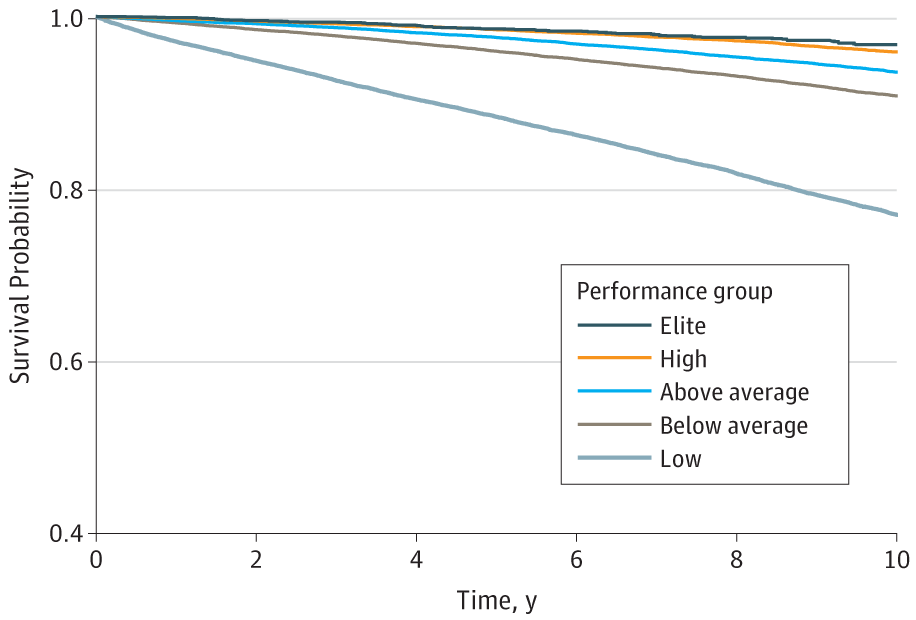
The concept to understand here is functional reserve.
Think of your fitness as a bank account. As we age, our physical capacity naturally declines. If you start with a high balance (high fitness), you have "headroom". When that natural decline happens, you still have enough reserve to climb stairs, carry groceries, and play with your grandkids well into your 80s. If you start with a low balance, that decline quickly pushes you below the "disability threshold", where you lose your independence.
The only way to build this reserve is through the "boring" work: regular aerobic exercise and strength training, consistently. Short-term interventions help, but the compounding effect of decades of training is unmatched.
⚙️ The nine habits that actually move risk
So, what does the evidence-based "Longevity Playbook" look like? It’s less about exotic protocols and more about mastering the fundamentals. These are the nine behaviours that reliably improve your odds of a long, capable life:
Do not smoke: it remains one of the most destructive things you can do to your body.
Treat alcohol with caution: alcohol is a toxin; the higher the dose, the greater the harm. Heavy drinking increases cancer and cardiovascular risk. Keep it as a rare exception, not background noise.
Move most days: aim for activity that makes you "a bit breathless" (brisk walking, jogging, cycling) and at least 150 minutes per week.
Train strength 2x a week: muscle is your armour against ageing. It protects you from frailty, falls, and metabolic dysfunction. Muscle mass and strength are strong predictors of morbidity and mortality, particularly in older adults.
Screening & vaccines: keep up with age- and sex-appropriate screenings. Prevention is always cheaper and less painful than cure.
Manage your key numbers: keep your waist circumference, blood pressure (optimal is below 120/80), lipids, and glucose in a healthy range. Eat mostly whole foods and skip the processed stuff. Use medication if lifestyle isn't enough.
Sleep enough and regularly: chronic sleep debt accelerates ageing and worsens almost every other risk factor, from insulin resistance to cognitive decline.
Invest in relationships: loneliness kills. Strong social connections are as vital to your survival as quitting smoking. Is it time to schedule that coffee date with your best friend?
Avoid the "stupid stuff": don't lose decades of life to a moment of recklessness. Avoid high-downside behaviours like driving drunk or texting behind the wheel.
🔺 The pyramid: where does your intervention sit?
To help categorise where you should focus your energy, we shared a simple framework: The Longevity Pyramid.

The base (the foundation): this is behaviour and environment. Sleep, movement, nutrition, and stress management. If this base is weak, nothing you stack on top will matter. You cannot supplement your way out of a bad diet or a sedentary lifestyle.
The middle (essential support): this is evidence-based medical care. This includes treating hypertension, managing lipids (with statins, if necessary), controlling glucose, and routine screening. For many, this layer is essential to extend healthspan.
The tip (the speculative): this is the realm of experimental add-ons. Off-label drugs (like Rapamycin), peptide stacks, and unproven biohacks. While some of the science here is exciting, evidence in humans remains preliminary and insufficient to justify routine use. Caution is required. Unfortunately, "The magic bottle doesn't exist yet."
🪄 Three decisions to start today
Most people wait for January to fix their health; the smart move is to protect it now. Information without action is just trivia. Here are three ways to build your functional reserve and battle the holiday bulge before it starts:
✅ Choose one thing to check: Don't guess about your health. Do you know your blood pressure? Your ApoB? Your fasting glucose? Pick one key metric you’ve been ignoring and get it tested this week.
✅ Choose one risk to remove: Create a boundary for the festive season. Identify one "high downside" behaviour (like liquid calories or sacrificing sleep for socialising) and decide to remove it from your routine today.
✅ Choose one habit to build: Start small to ensure it survives the busy season. Commit to two strength sessions a week, a fixed bedtime, or a daily 20-minute brisk walk. Build the discipline now, and the holidays become easy.
📝 Quick takeaways
Master the basics: the biggest lever for longevity is behaviour, not biohacking.
Healthspan > lifespan: the goal is to stay capable and independent, not just alive.
Get fit: moving from low to moderate fitness provides the biggest drop in mortality risk.
Consistency is king: small, repeatable routines beat intensity every time.
📢 Spread the Word
Did this issue spark some ideas? Share it with a friend who believes prevention is better than cure, or hit subscribe to stay in the loop.
🏢 Ready to build a culture of health? For organisations ready to lead the charge, Strove provide’s the operating system for preventive health that links data, behaviour change, and engagement into a unified experience.